

Curated Content

Recently Added

Exploring the Historic Towns and Hidden Gems of the Chesapeake Bay
The Chesapeake Bay is not only a great expanse of water, it’s a place of colonial streets, working waterfronts, lighthouses,…

Today’s Must-Reads
Front Porches of Yesteryear
When was the last time you saw your neighbors sitting on their open front porch? While writing my book concerning…

Stop Mayflies in their tracks!
The Richmond County Fair Association is sponsoring a unique and useful project for the benefit of the fair’s scholarship fund.…

Crazy Ladies
The Arizona Territory was the promised land for the young, the ambitious, the lawless, the temperate, the opportunist, and the…

Deals You’ll Love

Fan Favorites
Advertisement

Our Highlights
Exploring the Historic Towns and Hidden Gems of the Chesapeake Bay
The Chesapeake Bay is not only a great expanse of water, it’s a place of colonial streets, working waterfronts, lighthouses, seafood shacks, and quiet riverside lanes. Annapolis and St. Michaels are popular destinations, but the area has much more to offer those who take time to visit its smaller towns. The towns each have a different perspective on the life of the Chesapeake, including historic churches, secluded nature trails, crab houses, ferry crossings and maritime museums.
St. Michaels: Maritime Heritage
St. Michaels is one of the most famous historic towns in the Bay and it’s not only for its picturesque harbour. The Chesapeake Bay Maritime Museum occupies waterfront property and features restored boats, active boatyards, oystering and watermen’s displays and the 1879 Hooper Strait Lighthouse.
The visitor can wander the streets that are full of 19th-century houses, explore galleries and boutiques and sample fresh seafood with a view of the Miles River. The War of 1812 history of the town adds to the character; local tradition has it that the people hung lanterns in trees to throw the British off, hence the town’s nickname “the town that fooled the British.”
Oxford: Quiet Waterfront Charm
Located in Oxford, Tred Avon River, the city seems to be a getaway from the more hectic places. It has shaded lanes, sailboats, historic residences and small waterfront beaches to explore by foot or bike. The Oxford Museum features local maritime and colonial history displayed with items donated by local families.
The town’s most memorable experience is the Oxford-Bellevue Ferry, which has been in operation since 1683, and is said to be the oldest privately operated ferry service in the U.S. The short crossing is used by cars, bicycles and walk-on passengers to cross the river providing an essential link and a pleasant excursion.
Chestertown: Colonial Streets and River Views
The town of Chestertown on Maryland’s Eastern Shore is a mix of colonial and college town. The eighteenth-century Custom House, a Georgian brick building overlooking the Chester River, is among its historic districts; it now houses the Starr Center for the Study of the American Experience.

Stroll down High Street and make the most of the numerous cafes, galleries and independent shops, then head down to the water’s edge for river cruises. The annual Chestertown Tea Party Festival brings visitors to Chestertown in the Revolutionary era, as the town protested against Britain’s taxation.
Chesapeake City and the Canal
Chesapeake City lies on the Chesapeake and Delaware Canal, a viable waterway connecting the Chesapeake Bay to the Delaware River. It has been restored to its 19th century appearance, with small 19th century museums and restaurants lining the canal side, making it a good place for engineers and those with an interest in waterfront views. Maryland tourism touts it as one of the “old fashioned” towns in the Bay, along with Annapolis, St. Michaels, Cambridge and Crisfield.
Hidden Gems Beyond the Main Route
If you prefer to stay away from the hustle and bustle, try the city of Cambridge, with its Blackwater National Wildlife Refuge, historic streets and opportunities for birdwatching, kayaking and scenic drives. Further south, there’s a deeper dive into the Chesapeake seafood scene at Crisfield and Smith Island, where the community’s traditions and way of life are uniquely their own.

Another low-key place is Urbanna, Virginia. It is a small colonial era town, famous for its annual Oyster Festival and its laid-back waterfront atmosphere, which contrasts with other busier Bay towns.
Planning a Bay Journey
The best way to experience the Chesapeake is not to be in a hurry to get from place-to-place. Take one or two popular towns and one lesser-known town, allow for a ferry ride or river cruise, and sample local seafood from where it is caught. The spring and autumn are comfortable times of year, less crowded and with beautiful marsh and migrating bird views.
From historic sights to natural beauty, food, and more, the Chesapeake Bay’s towns offer a view of a region defined by water. Sometimes these treasures are not far away but in a side street, a small museum or a slow-talking beachside discussion.
Say It Isn’t Soy
Diabetic children. Premature puberty. Learning disabilities. Thyroid disorders. Uterine cancer. Reproductive problems. Weight gain. What is the common denominator?
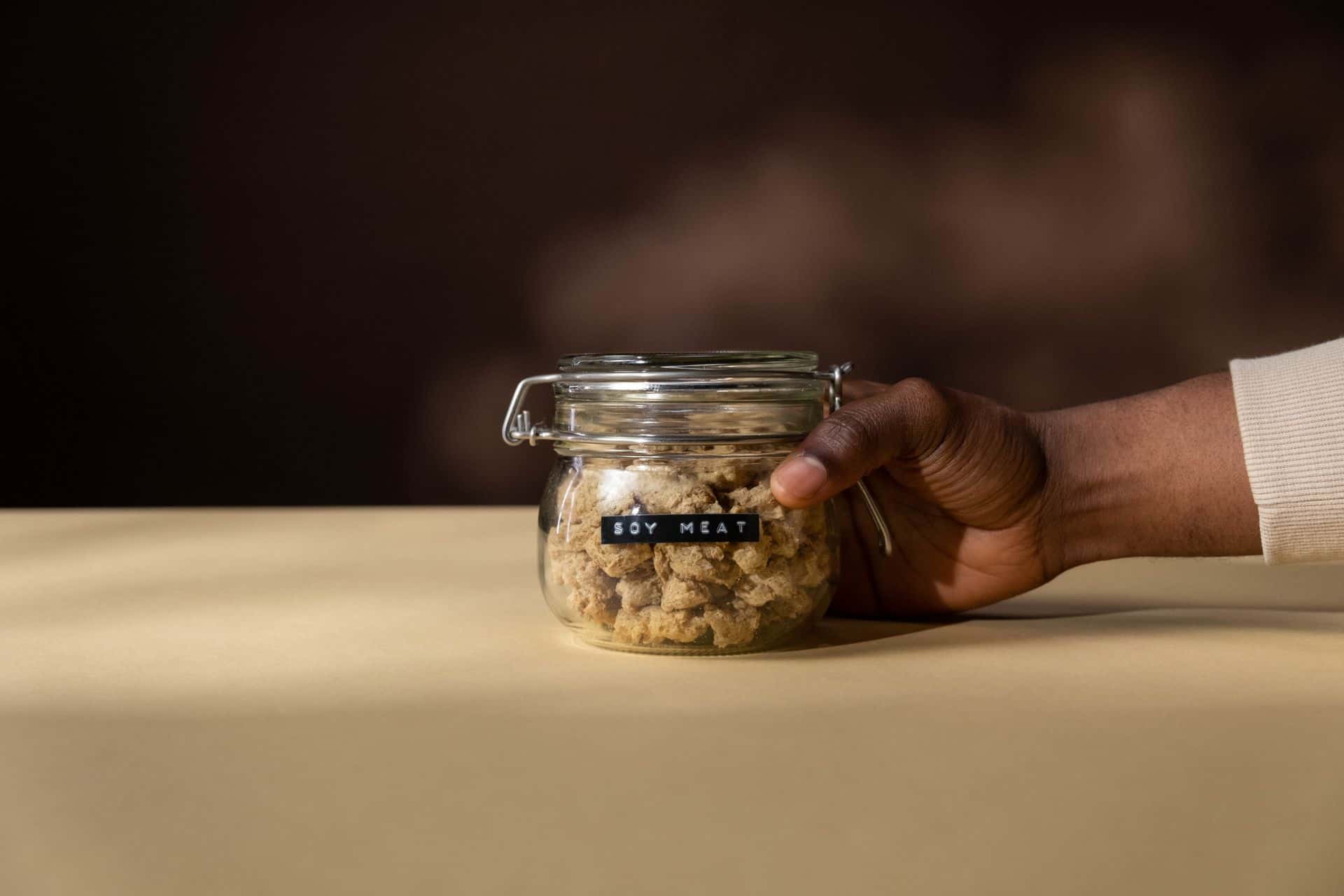
Soy.
“Milk Pails,“ Catherine C. Brooks’ nostalgic piece in the September issue of Chesapeake Style, emphasizes the joys of growing up on a farm in Mathews County, Virginia where rich cow’s milk, hefty chunks of butter, and clouds of whipped cream provided buoyant health and joy to all partakers.
Fast forward to 2004. Americans are beset by ailments seldom endured to this extent by earlier generations. Sally Fallon and Dr. Mary Enig, internationally respected nutritionists and directors of the Weston A. Price Foundation in Washington, DC, believe that the promotion of soy as a dietary panacea is the culprit, but their warnings are shouted down by those reaping a bonanza in the market place.
How did the lowly bean once regarded as a poisonous substance and used as a gasoline additive in the 1920s become the darling of health gurus and beauty advisors?
Blame the misinformed, the imitation food industry, the advertisers, and the American soy farmers who have leapfrogged economically over wheat, corn, and cotton farmers by boldly marketing soy to manufacturers in this country and exporting mega-tons of soy products to the rest of the world.
Exactly what is wrong with soy?
1. Soy is a phytoestrogen. In other words, it increases the estrogens in those who consume it. Is it any wonder, then, that children raised on soy formulas are entering puberty far earlier than previous generations? Or that women taking hormone replacement are more apt to develop breast cancer if they have a history of soy consumption?
2. Childhood diabetes, concurrent with rising adult obesity, has reached a national emergency. Reports suggest that children raised on soy-based products have twice as much chance of becoming diabetic as those who were breast-fed or consumed milk-based formulas.
Infants receiving soy formula are unwitting victims. Researchers conclude that they can expect high rates of reproductive disorders, asthma, and allergies. They may also suffer from brain damage caused by toxic manganese. Scientists report that soy infant formula contains up to 200 times the manganese of breast milk. Since babies cannot dispose of the excess, it lodges in the liver, the kidneys, the brain, and other soft body tissues. In time, manganese toxicity can lead to emotional behavior.
3. Young girls who develop breasts and pubic hair before the age of eight are no longer uncommon in public schools, but first, second, and third graders bewildered by their changing bodies are not sufficiently mature to handle peer teasing and the responsibility of changing sanitary napkins during the school day. Additionally parents and teachers worry that the rise of early puberty contributes to increased sexual activity among teenagers, even pre-teens.
4. Many women taking estrogen to ease or postpone the aging process unwittingly multiply the amount they consume by supplementing their prescriptions at the dinner table. This is double jeopardy.
Fallon and Enig attribute the explosion of soy products to claims by its boosters that Japanese enjoy better health than Americans because they consume great quantities of soy. This is simply soy-wash.
“Soy is a condiment in Asian diets, not a staple,” Dr. Enig says. “No one could call mustard a staple in the American diet even though it is a very typical foodstuff.”
She emphasizes that the daily average soy food consumption in Asia is less than nine grams, or about two teaspoons. This compares with the 35 grams of soy protein per day recommended by the FDA. Studies show that the daily intake of 45 mg for one month can cause hormonal changes in women, and yet the average daily intake of children receiving soy formula is 38 mg, a shocking amount considering the difference in body weight between infants and adults. In December 2003, Fallon testified before the FDA’s Food Advisory Committee about the negative health impact of soy infant formula. No action has yet been taken by the government to warn consumers
When I began teaching in 1970, overweight, diabetic, learning disabled, and sexually mature children were rarely seen in a typical elementary school classroom. In contrast, today’s schools are overwhelmed by children requiring special attention for these, and related, physical and mental problems. A growing body of credible medical and dietary research suggests that these conditions may be traced to soy products consumed by children or by their mothers prior to giving birth.
Has this situation occurred because the FDA is in the clutches of the imitation food industry, which presses soy milk and tofu burgers as replacements for eggs, fish, meat, milk, and poultry?
From cereals and pasta to quasi-dairy products, grocery and health store shelves groan with hundreds of soy-based items touted as cancer, osteoporosis, and heart disease preventives.
Contrary to unsubstantiated claims created by ad agencies, numerous scientific studies confirm that soy lowers thyroid functions and may cause goiters. In turn, low thyroid function contributes significantly to osteoporosis, heart disease, and menopause problems.
Expensive soy products hawked as health panaceas are a serious problem. Even more ominous, soy has sneaked in where it’s least expected, perhaps as a wheat or dairy substitute in noodles, soups, sauces, cookies, oven-ready meals, and low-fat elixirs. The cautious consumer must take time to read the ingredients in manufactured food products frequently purchased.
Total up the amount of soy Americans consume both with and without their knowledge and it’s easy to understand why the fields of soy spanning our heartland are the next killing fields.
Front Porches of Yesteryear
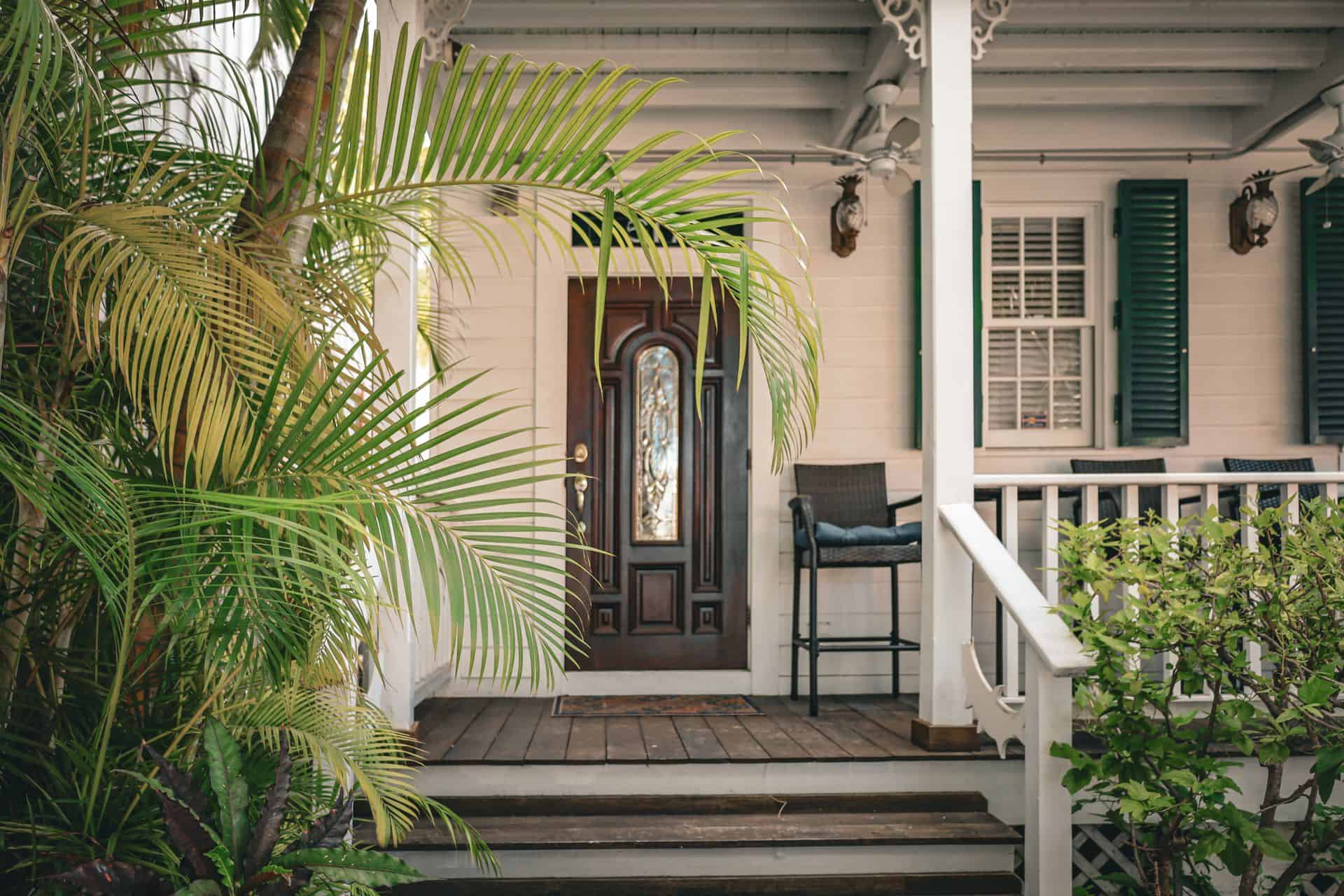
When was the last time you saw your neighbors sitting on their open front porch? While writing my book concerning post offices and community life in Mathews County in bygone days, the front porch became a picture in my mind. Screened or not, the front porch had rockers, often a glider, other chairs and perhaps a swing.
As late as the 1960s, they were in use, but since most have slowly disappeared. Many are enclosed with glass or just used as an entrance to the house.
We had a wrap-around front porch on my parents’ house with two entrances to the hall. The shaded side, making an inward L-turn and down the long section, around the next outside L-turn, just before the door facing the driveway, was screened. The 14 foot unscreened section, where the afternoon sun baked anyone or anything in summer, sat bare—only the door to the screened porch and the front door to the house were important once up the steps. On the northwest corner of that open section, snow piled in a blizzard or heavy snowstorm. So we had to clear a pathway to the steps.But the screened section had a porch swing on the shorter section of the L for many years. Later Momma removed it for a rocker. A glider sat in the corner.
Keeping past the hall door, a wicker rocker and wicker chair sat on either side of a small table. A wicker fernery filled with potted plants sat across the porch up against the screen. It was truly an outdoor living room with humming birds nesting in the climbing rose bush and scrubs. They came out to suck nectar from blooms mornings and afternoons. Other small-song birds opted to hop from branch to branch of the shrubbery, eating insects and any berries before they flew into the maple tree to serenade us. The porch made a tranquil setting, especially in the mornings before the sun’s direct rays peeped through the greenery. Daddy enjoyed entertaining his Uncle John Callis and others mornings during his last few years. He had been unable to work after radiation treatments and was completely disabled his last summer.
On the screened section of the porch is where Kirby and I first kissed. In those days, the reserved men didn’t kiss until they knew the girl would become his wife. It is where in August 1944 Kirby said, “Let me tell you goodbye here. Tomorrow Mama and Daddy will be with us so I can’t do it,” showing how shy he was. As he held me in his arms for minutes, we didn’t know his future. So we just enjoyed the moment that would be dear to each of us in the next 18 months while he served in the Pacific. But on his return in March of 1946, I didn’t take time to go the long way through the screened area of the porch. I met him on the open porch just outside the main front door. We hugged and kissed without saying a word for a few moments.
Our family used that screened area, the larger section of the porch both night and day. On hot summer nights, sleeping on the second floor was unbearable except in one room. My sister and I occupied that after Momma refurbished it to usable condition the year I had my 12th birthday. It had cross ventilation with a window facing the east and another the west—the way houses were built in the mid-nineteenth century. If a breathe of air moved, we felt it. We would sleep at the foot of the bed so our faces cooled first. On those hot nights, Daddy slept on the glider on the front porch. We had a screened side porch next to the dining room with a day bed.Momma slept there. But before the room was refurbished, Lou and I had pallets in the dining room floor between two doors—one on the north and the other on the south.Hard beds for sure!
In those days we didn’t have electricity in the outlying areas of Mathews.Then electric service finally became available about 1940. Wiring a 10-room house took all Daddy could afford with pull chain overhead light fixtures in the bedrooms, and one light with switches in each of the kitchen, the dining room and the living room. The electrician put two receptacles in each room at the time. We got appliances one at the time with an electric refrigerator the first on the list. However, a fan was the last thing on our minds until Momma had to go to the hospital in August 1946. Daddy found her not only in pain, but practically melting from the intense heat on his first visit.So he went shopping for a small fan, which she brought home with her.They never had anything but “Grace’s fan” before they died: Daddy at age 50 in 1953, and Momma at age 49 in 1955. Yet, the open front porch filled the need for much needed ventilation.With the side door to the hall and all windows open, the air drew through the large rooms to the back door and side windows in the living area. Seldom do I remember that we even needed a fan. The house sat not only in an open space, but a cove from Billups Creek made up back of the house. Thus, we enjoyed breezes that bays and creeks bring.
In 1933, we lived with Grandpa and Granny Callis. Their front porch, the width of the house, had no screening, but four rockers sat there for all to enjoy from late May until early October.Few days passed without company after supper unless rain poured. They had more close neighbors and less farmland than down Field Neck, where our place had been leased for a year. After the chairs filled, one or two people sat sideways on the edge of the porch.We children sat wherever there was a space—Lou in Daddy’s or Momma’s lap, or if too hot at their feet. I’d sit on the porch edge with the others. If Miss Della Callis walked over, her daughter, Helen, came with her. Though she was 18 months older than me, we were great friends. So if the neighborhood news wasn’t interesting to us, we’d go somewhere else to play or talk, letting the older folks enjoy their sit after a hard days work.Sometimes we’d chase lighting bugs, placing them in a jar to watch for a time. But we let them lose before Helen went home.
Miss Flora Belle Forrest lived down a path in the back of Grandpa’s house so she came frequently.Miss Anna Miles lived across the road and up a lane back in the woods—we enjoyed her and Mr. Jim too when he came. All of these women were married, but if we didn’t call them “Miss,” we were scolded. It denoted respect for our elders. We barely knew their last names so didn’t say Mrs. So and So except to strangers. After an hour’s visit, it’d be time for the visitors to go home, and we went in the house to outwit the mosquitoes.
I visited with Momma or both of my parents on others front porches both days and nights. Granddaddy Richardson lived in Hampton, and he had two rockers on his front porch—one for Granny and his. A straight chair or two was brought out of the house when they had visitors. Granny always sat in one of them. His last house had an open-front porch. Many of the neighbor men sat on the edge of the porch to chat a few minutes on their way home or going to another neighbor’s place.No one worried about anyone stealing the chairs back through the 1960s. When the weather became too cool to use the porch, they turned the rockers up against the house to protect the seats and backs.
When my husband and I married soon after his discharge from the service, we lived with my parents for two years. He was apprenticing in cabinet making and upholstery so income wasn’t what we had hoped. After his maternal grandparents gave us two acres of land on which to build a house, we had trees that Daddy gave us sawed for part of the lumber for the house we wanted to build. It was then that Kirby realized we should build a garage for storing supplies as we purchased them. To shorten a long story, he had built a bit larger than the standard garage with a separate room on the back for a trailer he had made at his workplace for hauling. We had an electrician wire the building, having decided we’d live in the garage temporarily. We finished the interior, dividing it into a kitchen, tiny bathroom, living room and bedroom. There was no front porch, and I haven’t enjoyed one since.You see the house that we had planned never materialized.In fact, when time came we could build it, we didn’t even care for our youthful fancy. A baby came the year after we moved so we enjoyed each day and didn’t worry that our house had been intended for a garage.
Air conditioning and television has changed society’s lifestyles. Instead of gathering to get the neighborhood news, we stay inside.Today’s children miss the great togetherness I knew as a child
Stop Mayflies in their tracks!
The Richmond County Fair Association is sponsoring a unique and useful project for the benefit of the fair’s scholarship fund. May is at hand and an awful reality of this beautiful time of year is contending with Mayflies. Whether you are cutting the grass, pulling weeds or just walking to the car, locals are often deluged by swarms of this annual aggressive pest. If you live near the water or a marshy area, they are much more numerous, last longer than May and seem to be more voracious! The product, called Deerfly Patches, will help stem the tide and stop Mayflies in their tracks. These specially designed patches simply adhere to the back of the wearer’s cap and trap these dreadful biting insects before they bite you. Don’t let the name fool you, Deerflies and our local Mayflies are members of the same family. Local users have confirmed the effectiveness of the product, they really work.
Here’s the other good thing. Aside from ridding yourself of a pest, your purchase of this product will help fund the prize and scholarship jackpot that youth contestants will vie for at the annual Richmond County Fair, August 20-23. So that makes two good things, one for you and one for the kids!
Crazy Ladies
The Arizona Territory was the promised land for the young, the ambitious, the lawless, the temperate, the opportunist, and the daredevil. They arrived by trusty steed, shanks’ mare, or horse and buggy to carve a future in the hostile desert. A man’s vista was boundless.
Women, however, were pawns in a game of jeopardy. Their employment opportunities were limited to serving men in want of cooked meals, clean rooms, laundered garments, and recreation that women-starved males crave. An occasional spinster teacher or nurse ventured into the Territory, but the bulk of the female population fell into two camps: respectable matrons and all others.
Regardless of social status, these pioneer women were second-rate citizens, unable to vote and protect themselves against evil lurking in the hearts of men. The wise woman conducted herself with decorum. If married, she tended her household dutifully, obliged her family’s needs, and behaved modestly. Until 1886, the depressed, the nag, the afflicted, and the religious zealot were tolerated, burdens to the men they served.
But the opening of the Territorial Asylum for the Insane in Phoenix offered a diabolic alternative. Freedom from financial or emotional responsibility for a bothersome female was but a petition away. Woe be, thereafter, to women who roiled the waters either by design or disposition.
Applications for Commitment, housed today in the Arizona State Archives and Public Records Office of the State Capitol, document the incarceration of women whose depression and various stages of unbalance would be managed today with out-patient therapy and prescriptions.
Petitions for commitment were easily filed by any relative, friend, Territory official, or casual acquaintance. Within a single day, the subject could be apprehended, examined by court-appointed physicians, and disposed of into the belly of the Asylum by a presiding judge. Records reveal that women whose behavior was influenced by pregnancy, the menstrual cycle, or menopause were victimized by family and physicians with a medieval understanding of normal female body functions.
Maria de la Bosch, 22, was judged to be insane by her husband, Arthur. The doctors agreed. They committed her on September 8, 1909 for depression from pregnancy and “lack of interest in things about the house.” Similarly, Joseph Dobson sent away his wife, Mabel, 38, on September 6, 1904, supported by the doctors’ evaluation that her depression and rambling speech were caused by childbirth. According to a marginal notation, she muttered throughout her examination that she “was going to Hell.”
And she did. Some women sent to the Asylum were short term inmates, while others survived months, even years, in dank cells, their ultimate tombs. No matter the term of confinement, all endured rough handling by unsympathetic attendants and an incessant cacophony of moans and piercing screams from fellow inmates.
Many women committed for mid-life depression owed their misfortune to exterior causes, not physical change. Two months after moving to Phoenix from New Mexico, Julie Barfoot, 41, was committed on June 28, 1911. The signs of homesickness she exhibited were interpreted by her husband, Malcolm, as “losing her mind.”
Anna Anderson Brown, 39, born in Sweden, had lived in Arizona four years when her husband, Jackson C. Brown, lost patience with her melancholy behavior. The doctors confirmed that she “cried and talked of wanting to go away to see her sister,” but they committed her on November 25, 1910 without addressing the homesickness and concern for distant family members that precipitated her depression.
Homesickness for Colorado caused the downfall of Betty Ann Hickman, 37, whose husband reported the onset of “mental attacks” and “irrational behavior” three months before he requested her commitment on June 29, 1903. Although the doctors observed nothing unusual during their examination, Betty’s husband left the courtroom free from a complaining and tearful wife.
Garrulous women fared no better than their melancholy sisters. Minnie Zion, 31, went to her doom on December 21, 1908, just in time for her husband, P. L. Zion, to celebrate Christmas and the New Year in footloose fashion, free from her “constant talking.” Likewise, Minnie J. Blount, 47, chattered her way into the Asylum. “Minnie talks incessantly…is very nervous, and does not sleep well,” complained her husband, F. A. Blount. The cause, he believed, was “mental worry.” Rather than address its source, the doctors ordered her committed on December 13, 1909. Exactly one month later, on January 13, 1910, J. A. Kitcherside, Medical Superintendent of the Territorial Asylum, signed Minnie’s death certificate. He listed the cause as “cardiac insufficiency.” Did she smother to death while being held down by brutal attendants? Tales of such mistreatment flourish.
Annie Ellis, 35, worked as a laundress to help pay for the family home and lot. Despite her financial contribution to the household, her husband complained that “she does not take care of the house or child and rambles about at all hours of the night.” Even though the doctors noted that she “seemed to be rational,” she was committed on March 22, 1909. A note in her file dated May 5, 1909, indicates, “…patient expired at Arizona State Hospital while awaiting conditional discharge.”
Exasperated because his wife Clara, 32, became morose during her menstrual periods, E. A. Strong petitioned the court to commit her, testifying that she was not dangerous, but sometimes went without eating or sleeping, “talked in a rambling and incoherent manner,” and whipped her oldest girl “…at times very severely and without reason.” Clara entered the Asylum on December 23, 1902, assuring her husband a worry-free holiday. On April 4, 1903, Dr. W. H. Ward, Medical Superintendent of the Territory Asylum for the Insane, signed a death notice stating that Clara died at the Asylum on April 2, 1903 of “exhaustion from acute mania.”
Lizzie Bowen, 40, whose husband Robert complained of her melancholy and “fits of violence,“ told the examining doctors that she believed she was being poisoned. The doctors observed her to be quiet and in fair health without signs of the violence her husband reported, but instead of investigating her assertion that he was trying to kill her, they ordered her committed on March 15, 1906.
Ida Tompkins, 45, was nervous and sleepless, symptoms of menopause. George, her husband, cited “lactation and debility” as further proof of insanity. The judge, noting that George “has means” to pay for her maintenance, committed her on May 11, 1905.
Men of means, like George Tompkins, had little difficulty persuading the doctors and judges to put away irksome women. H. Wupperman petitioned that his daughter, Gracie, 17, had “nervous prostration,” a nebulous ailment frequently attributed in the court documents to unmanageable women. “She talks incessantly,“ the doctors wrote, “and thinks her father is losing his mind and needs looking after.”
Could Gracie have been the sane family member?
No matter, her father willingly paid her Asylum expenses. She was committed on July 18, 1904.
Maida V. Nelson, 19, traveled to Arizona early in 1908 to live with her married sister. Five weeks later, Elijah Allan, her brother-in-law, had endured enough of Maida’s presence to petition the court for her commitment. He declared, “she is very absent-minded, cannot carry on a long conversation, refuses at times to eat, and would wander off and become lost if not watched.” He attributed these traits to cessation of her menses, a trauma he blamed on her father whom he regarded as “a peculiar man, studying and thinking abnormally on religious subjects.” The examining doctors found Maida to be quiet and orderly, but cited gradual deterioration of her memory as reason to commit her.
The medical examiners who correlated behaviors typical of pregnant and menstruating women with insanity also erred in sorting out those with true physical ailments. Sadie Vaughn, 33, was arrested by Special Deputy Ike Ford after an attack of “nervous prostration.” In his petition, Ford wrote, “(Sadie) has no mind of her own, talks in an irrational manner, and is subject to fits of complete collapse.” Sadie was committed February 4, 1905 by court doctors who observed her to be “…very filthy, noisy …and an epileptic.”
Like Sadie, Ola May Farley, 18, was an epileptic. Her father, John Farley, stated that she threatened to kill herself and others, possessed an uncontrollable temper, and had epileptic fits. The examiners found her to be in good physical condition, clean, and quiet, but committed her on December 3, 1906, citing her “inability to remember things.”
Dolores Latusmado, 29, a Mexican domestic, appeared before the court on petition from Deputy Sheriff Oscar Roberts who arrested her because she “is an epileptic, is not all right, will not care for her children, and does not sleep.” The doctors noted that she “does not answer questions intelligently.” Could language have been a barrier? They committed her on February 1, 1904 because of “monthly epileptic attacks,” her tendency to become “hysterical at mention of husband or children,” and constant crying.
Cordelia Ivy, 23, was committed in early 1903 following her father’s complaint that she had wandered away from home and talked in an irrational way for fifteen years.
The court doctor observed, “Cordelia seems to be deaf…does not seem to understand all that is said to her,” and “has fits of temper.” Like other women suffering from epilepsy or deafness, Cordelia likely spent the rest of her days in confinement.
While most unwanted women were sent to the Territorial Asylum by husbands and fathers, some had meddling friends to blame for their incarceration. Maggie Black, 36, made the mistake of confiding to William Dohency that she suspected her husband of indiscretions while he was away from home working at Mammoth Mine in Pima County. In his petition, Dohency declared that Maggie “talks incoherently at times” and “is unable to take care of herself and her children while her husband works out of town.” The doctors noted that Maggie “had muscular twitching, want of coordination,” and talked of expecting “her ranch to be burned and her children killed because her husband is untrue.” Concluding, “in our opinion this is temporary,” they committed her on April 26, 1906, giving her husband all the more reason to carouse.
Charles E. Hazelton petitioned for the commitment of his friend, Louise Miller, 33, on the basis of her “incoherent talk, nerves, poor sleep habits, and fear of her divorced husband.” In the presence of the court doctors, Louise “was nervous and prayed, walked about combing her hair, drinking large quantities of water, and speaking of things she saw.” On December 16, 1909, her ex-husband ceased to be her primary fear.
Numerous women became familiar with the Asylum on a revolving door basis. Carrie List, 50, was the subject of two separate commitments, the first on February 3, 1904 when her son, John List, told the court she took poison and threatened to kill her husband. He attributed her behavior to “irritation in home life.” The doctors remarked about her “tremendous good appearance,” yet sent her to the Asylum. Her release the following year was short-lived. On November 18, 1905, a friend, J. Holley, petitioned for her re-commitment. “She is excitable and talks insane,” he reported, expressing astonishment that “she has left home and refuses to return,” and threatens to “throw her mother-in-law out of the house using force, if necessary.” The doctors, concurring that Carrie “is erratic and very talkative,” punished her for acting up before the over-bearing husband, ungrateful children, and spiteful in-law.
These representative victims of ignorance were mere blips in the early history of the Arizona Territory, the promised land, whose lawgivers tacitly condoned disposal of troublesome women to the insane asylum. In 2005, the State of Arizona ranks second nationally in domestic violence-related murders of women by men.